
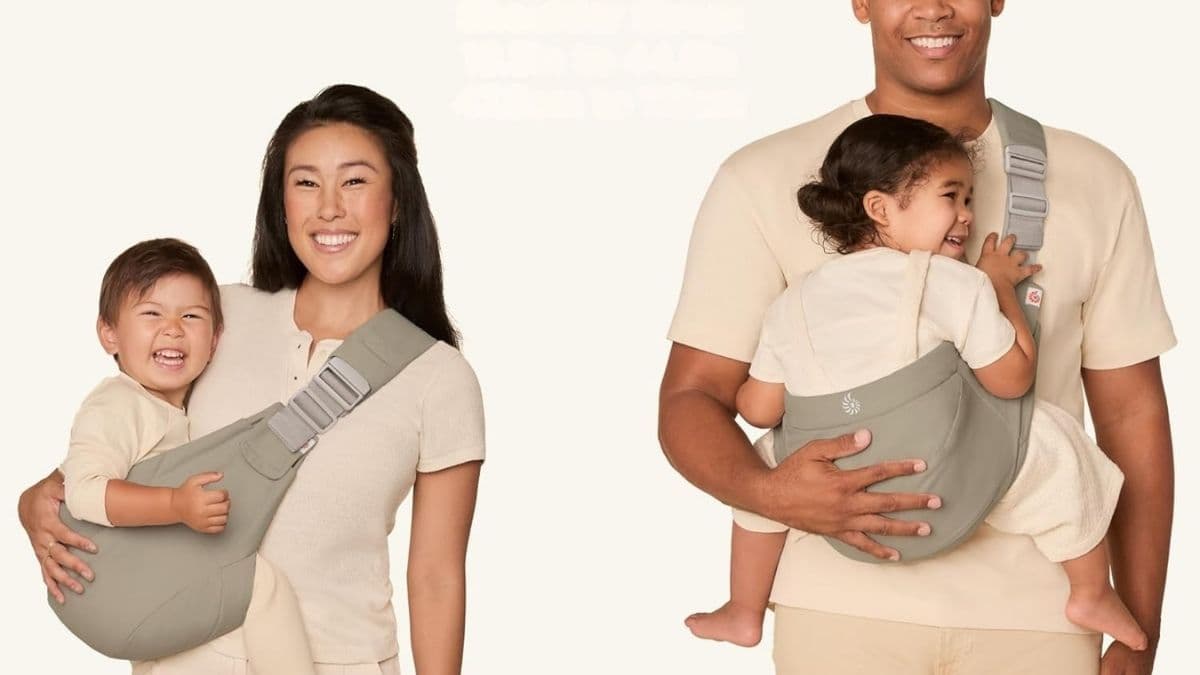

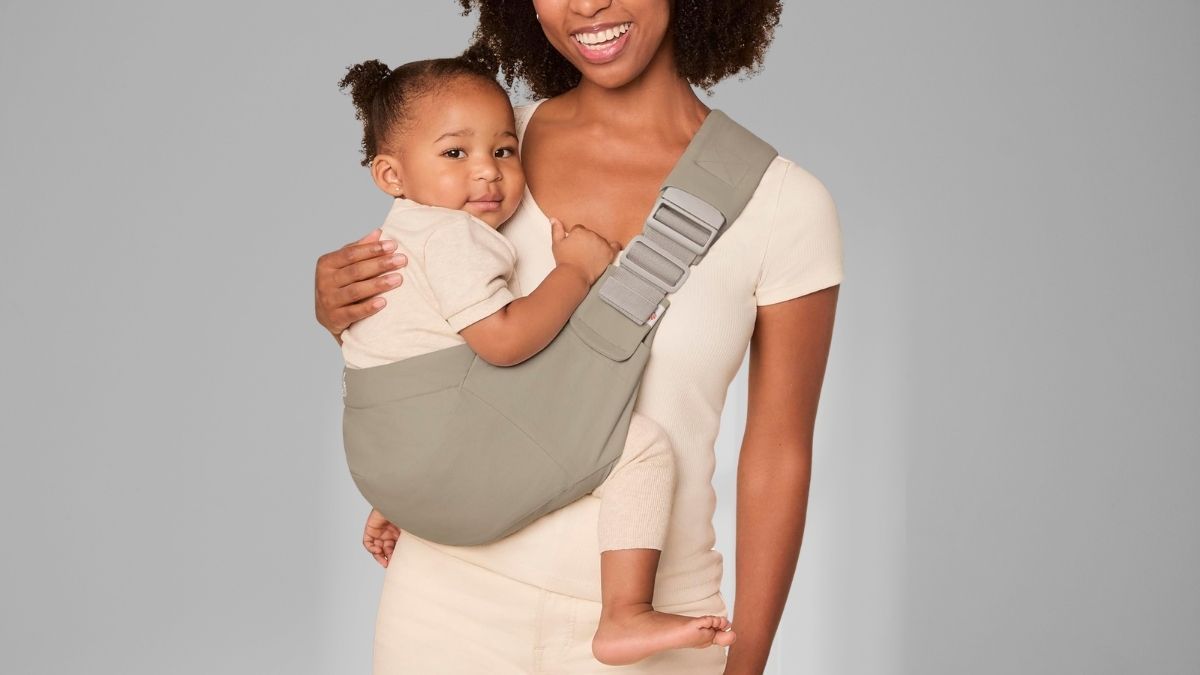
Before you dive into features and specs, it’s important to understand the role this product plays in your routine.
You’re not replacing a traditional baby carrier—you’re adding a practical tool built for speed, convenience, and flexibility. This is especially useful during the toddler stage, when your child constantly wants to be picked up and put down.
Instead of dealing with straps or complicated setups, you get a quick, grab-and-go solution that reduces strain on your arms. Think of it as a helper for short, everyday moments rather than a long-wear carrying system designed for extended use.
Core Concept: What This Carrier Brings to Your Routine
The Ergobaby Upsie Hip Sling bridges the gap between carrying your child in your arms and using a structured carrier. It’s built for real-life parenting moments—especially when your toddler constantly asks to be picked up and put down.
With a price typically ranging from $56 to $59, it sits in a practical mid-range category. You’re paying for ease of use and portability rather than advanced carrying systems. If your priority is quick access and minimal hassle, this design makes sense.
What You’re Getting at a Glance
To make a smart decision, you need a clear understanding of what this carrier offers in terms of size, capacity, and usability.
Specifications & Dimensions
The Upsie Hip Sling is designed to grow with your child, especially during the toddler phase when independence increases but carrying is still part of your daily routine.
It supports children from 6 to 48 months, assuming they have strong neck control. With a weight capacity of 17 to 45 pounds, it comfortably handles most toddlers.
The carrier itself weighs around 1 pound, making it easy to carry, pack, and store. The adjustable waist belt fits sizes from 22 to 52 inches, which means it works for a wide range of body types.
You also get a cotton-polyester blend for durability and comfort, along with a foam-supported seat that helps maintain structure. Cleaning is simple—you can machine wash it on a gentle cycle, which is a practical advantage for everyday use.
Features That Actually Matter Day-to-Day
Specs are helpful, but real value comes from how the product performs in your daily routine. This is where the Upsie Hip Sling starts to stand out.
Key Features Breakdown
- Ergonomic Hip Seat: Keeps your child in the recommended “M-position,” supporting healthy hip development while reducing strain on your body.
- Quick Up-and-Down Design: Ideal for toddlers who constantly switch between walking and being carried—no complicated setup required.
- Lightweight Build: At just 1 pound, it won’t weigh you down during errands or travel.
- Adjustable Waist Belt: Helps distribute weight across your hips instead of your arms, improving comfort during short carries.
- Built-in Storage Pocket: Lets you keep essentials like your phone, keys, or wipes within easy reach.
- Non-Slip Seat: Adds stability, helping your child stay secure while seated on your hip.
These features focus on one thing: making your day easier without adding complexity.
Real-World Performance and Use Cases
Understanding how this carrier performs in everyday situations helps you decide if it truly fits your lifestyle.
Where It Works Best
The Upsie Hip Sling shines in short, practical scenarios. You’ll notice its value when you’re moving quickly and don’t want to deal with straps or adjustments.
It works especially well during errands, travel transitions, quick walks, or even at home when your toddler wants comfort but not full-time carrying. You get support without committing to a full carrier setup.
Where It Falls Short
At the same time, it’s important to recognize its limitations so you don’t expect more than it’s designed to deliver.
It’s not fully hands-free—one arm still supports your child. It’s also not suitable for newborns and doesn’t offer multiple carrying positions. Over longer periods, you may still experience fatigue, especially on your supporting side.
If you need something for extended wear or complete hands-free mobility, a structured carrier may still be necessary.
Comparing It to Other Options
Before making a decision, it helps to look at how this product fits within the broader category of baby carriers.
Expert Insight
The Upsie Hip Sling is often described as a “transition carrier.” It fills the gap between fully carrying your child manually and using a more structured system.
Compared to options like Tushbaby:
- Upsie is lighter and more minimal
- Tushbaby offers more storage but feels bulkier
This means your choice depends on your priorities. If you want something simple and portable, Upsie makes more sense. If you prefer added functionality, you might consider alternatives.
When the Upsie Hip Sling Makes the Most Sense
Before making your final decision, take a moment to match the product with your daily needs. The value of the Upsie Hip Sling depends heavily on how you plan to use it.
Quick Summary Before You Decide
- Best for short trips and quick carry situations
- Ideal for toddlers, not newborns
- Lightweight and easy to bring anywhere
- Not fully hands-free
- Works best as a secondary carrier, not your only one
In real-world use, this carrier solves a specific problem: making those frequent “carry me” moments easier and less tiring. It won’t replace every baby carrier you own, but it can become one of the most used tools in your routine.
If you’re considering adding it to your setup, you can find the Ergobaby Upsie Hip Sling on Amazon along with similar toddler carriers. It’s worth browsing to compare options, read real user reviews, and explore more practical gift ideas for parents like you.